Weak or absent catch
The hand pushes down and back rather than anchoring and pressing water towards the feet.
Kicking hard, arms along for the ride
Usually a pool-raised swimmer with a phenomenal leg kick that masks a weak catch. Take the kick away — or put a wetsuit on — and the wheels come off.
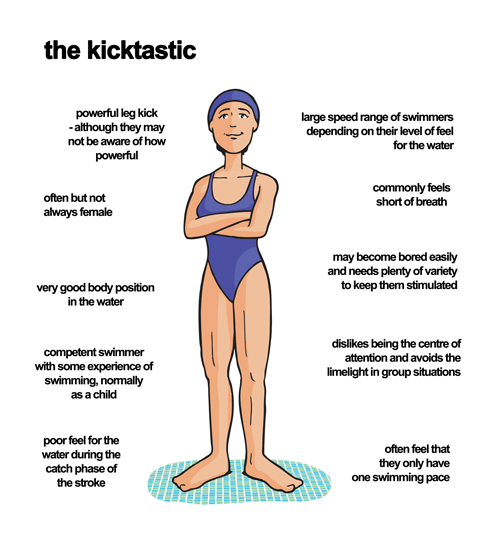
Kicktastics are usually pool-raised swimmers, often with a club or squad background and a phenomenal leg kick. In the pool, in a swimsuit, over shorter distances, they're quick — and it feels like the stroke is working perfectly.
The trouble is that the kick is masking a weak catch and pull. Take the legs out of the equation — put on a wetsuit, swim in a pack, or add a pull buoy — and the Kicktastic's speed evaporates. Many are genuinely slower with a pull buoy than without it, which is the classic Kicktastic tell.
Kicktastics also tend to fade badly in triathlon, where the legs need to be saved for the bike and run. Building a real catch is the single highest-return change this type can make.
→Constant six-beat or flutter kick at high intensity
→Hand pressing down or slipping at the front of the stroke
→Dropped elbow through the catch phase
→Good body position, largely produced by the kick
The hand pushes down and back rather than anchoring and pressing water towards the feet.
The elbow leads the hand, so the forearm never becomes a paddle and propulsion leaks away.
Energy that a triathlete needs on the bike is being spent holding position in the water.
Sequence matters more than effort. Work through these in order — skipping ahead is why most stroke work fails to stick.
Early vertical forearm work: fingertips down, elbow high, forearm facing backwards before you apply any pressure.
Deliberately remove the legs so the arms have to learn to carry you. Uncomfortable at first, transformative within weeks.
A lighter, two-beat or relaxed six-beat kick that supports rhythm instead of providing propulsion.
Practise where the legs are neutralised so race day doesn't come as a shock.
8 × 100m with a pull buoy at a controlled pace, focusing on a high elbow catch.
6 × 50m to feel the forearm anchor before the full stroke.
4 × 50m with the ankles banded. Brutally honest feedback on how much the arms are actually contributing.
Common in ex-club swimmers moving into triathlon and open water for the first time.
The fully revamped Swim Smooth Kicktastic PDF: stroke analysis, the complete fix order, drills, sets and a training structure written specifically for this type.
Get it for $9.99The Guru holds the complete stroke-correction pathway for The Kicktastic, plus Stroke Insights — which identifies your type from your actual swimming data, not just the questionnaire.
Explore the GuruWith a genuine catch, the Kicktastic becomes a Smooth or a Swinger and finally races as fast as they train.